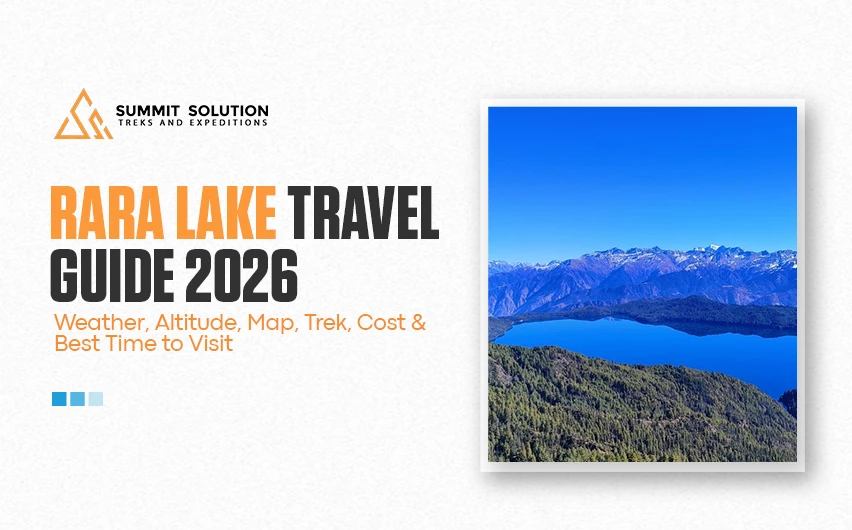
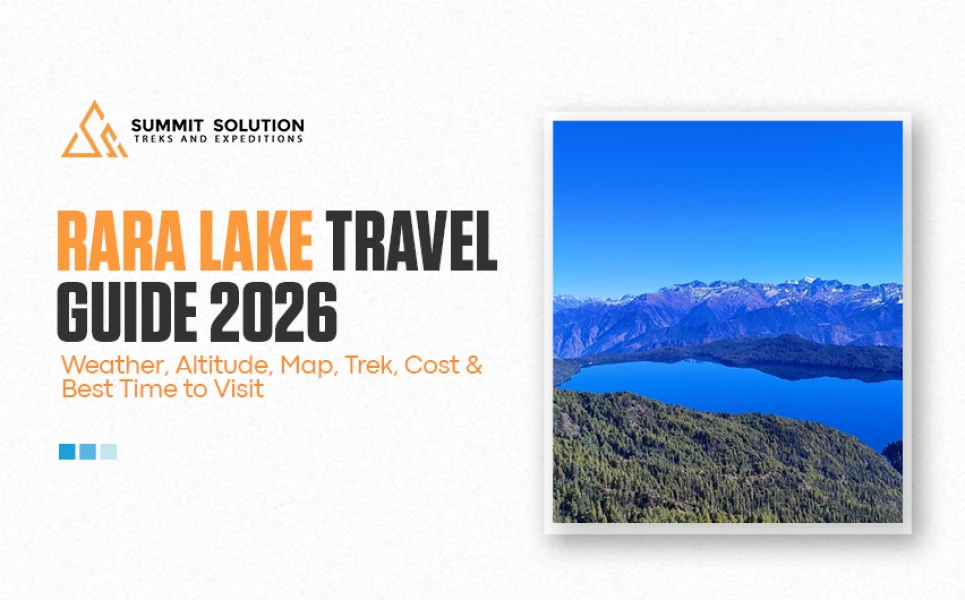
Western Nepal does not cater to lazy tourists. It is raw, distant, and challenging to reach. However, if you push past the bumpy roads and long flights, you find Rara Lake, the absolute biggest lake of Nepal. This massive body of water sits like a deep blue mirror surrounded by thick pine forests and snow-capped peaks. Unlike the crowded trails in Pokhara or Everest, this region offers absolute silence. You can walk for hours here without seeing another foreign trekker. It is an ideal escape for travelers who want a real adventure without the commercial noise.
But, before you pack your bags for this wilderness, you need to know ground realities. This is not a journey you can easily play along at the last minute.
Cash is King: There are zero ATMs once you leave Nepalgunj or Surkhet. Bring enough Nepali Rupees to cover your entire stay.
Flight Delays Happen: The small airstrip at Talcha Airport relies entirely on clear skies. Always build two buffer days into your travel itinerary.
Basic Lodging: Accommodation around the lake consists of simple, rustic guesthouses. Expect cold running water, shared toilets, and basic local meals.
Rara Lake is located in the Northwestern region of Nepal, split between the Mugu and Jumla districts within the Karnali Province. The entire body of water and its surrounding forests are fully protected inside the boundaries of Rara National Park. This remote location keeps the area clean, wild, and incredibly quiet.
The park itself shares borders with Bajura district to the southwest. Because it sits so far from Kathmandu, the local culture remains largely untouched by heavy tourism. The people living in the scattered buffer-zone villages belong mostly to the Thakur and Chhetri communities, preserving a traditional lifestyle focused on high-altitude farming.
If you look at a rara lake in map of nepal, you will find it positioned in the upper left quadrant of the country. It sits roughly 370 kilometers northwest of Kathmandu as the crow flies. However, ground travel is a completely different story due to the rugged Himalayan terrain.
Step 1: Kathmandu → 1 hr flight → Nepalgunj
Step 2: Nepalgunj → 35 min flight → Talcha Airport
Step 3: Talcha Airport → 3 hr hike → Rara Lake
To visualize the route, most travelers start from Kathmandu and head southwest to the lowland city of Nepalgunj near the Indian border. From Nepalgunj, the map lines point directly north, cutting straight over the steep ridges of the Mahabharat Range into the deep valleys of Mugu.
Rara Lake Altitude and Physical Dimensions
Understanding the exact rara lake altitude is critical for your physical preparation. The surface water of the lake sits at a high elevation of 2,990 meters (9,810 feet) above sea level. This means the air is noticeably thinner than in Kathmandu or Pokhara.
When discussing the total rara lake height, you also have to factor in the surrounding ridges. Most trekkers hike up to Murma Top for a panoramic view. That viewpoint pushes you up to an elevation of 3,730 meters (12,237 feet), where mild symptoms of altitude sickness can easily occur if you climb too quickly.
The physical scale of this natural wonder is massive. The lake stretches 5.1 kilometers in length and 2.7 kilometers in width. It holds billions of gallons of crystal-clear water and reaches a maximum depth of 167 meters (548 feet), making it exceptionally deep.
|
Metric / Feature |
Details & Technical Specs |
|
Official Rara Lake Altitude |
2,990 meters (9,810 feet) |
|
Maximum Ridge Height (Murma Top) |
3,730 meters (12,237 feet) |
|
Total Surface Area |
10.8 square kilometers (4.2 sq miles) |
|
Maximum Water Depth |
167 meters (548 feet) |
|
Water Clarity Type |
Ultra-oligotrophic (extremely clear, low nutrients) |
|
Unique Native Wildlife |
Rara Snow Trout (Schizothorax raraensis) |
The water remains remarkably clean because no heavy human settlements dump waste into it. Because of this pristine environment, three species of endemic snow trout live exclusively in these waters and nowhere else on earth.
Rara Lake Weather and Climate
The Rara Lake weather shifts dramatically depending on the month you choose to visit. Because of its high-altitude mountain climate, temperatures can go below freezing very quickly after sunset, even during pleasant months.
This is an incredible window for photography and trekking. The winter snow melts away by late March, opening up the high mountain passes. Daytime temperatures range from 15°C to 20°C (59°F to 68°F), making walking comfortable. The surrounding hillsides burst into bright colors as pink, red, and white rhododendrons bloom. Nights remain cold, often dropping down to 0°C (32°F), so a thick down jacket is mandatory.
Autumn provides the absolute clearest skies of the year. The heavy summer rains wash all the dust out of the atmosphere, leaving the air incredibly sharp. The lake reflects the deep blue sky and the surrounding snow peaks perfectly. Daytime temperatures hover around 12°C to 16°C (53°F to 61°F). By November the first signs of winter are beginning to show and night temperatures often drop to -3°C (27°F).
Winter brings extreme cold and heavy snow to the Karnali region. Daytime temperatures rarely climb past 7°C (45°F), and nights drop to a freezing -10°C (14°F). The lake water does not completely freeze over, but the surrounding trails and the runway at Talcha Airport frequently get covered in thick ice. Most local teahouses close down for the season, making independent trekking nearly impossible without heavy expedition gear.
This is the most hazardous time to travel to Western Nepal. The region receives heavy, relentless rainfall. While the lake area itself looks lush and green, getting there is a nightmare. The famous Karnali Highway suffers from massive, unpredictable landslides that can trap vehicles for days. Clouds completely cover the mountains, and flights out of Nepalgunj face constant cancellations.
If you want a smooth, safe, and visually spectacular trip, book your travel itinerary between April and May or October and November. These months offer the most stable weather, operating flights, and open guesthouses.
The Ultimate Rara Lake Trek: Itineraries & Routes
There are three distinct ways to experience a Rara Lake trek. Your option is purely a matter of finance, of travel time, and of physical adventure.
This is the traditional trekking route that follows old trade paths through remote villages. It requires good physical fitness as you cross several high passes.
Day 1: Fly from Kathmandu to the hot plains of Nepalgunj. Overnight in a local hotel.
Day 2: Take an early morning scenic flight from Nepalgunj to the mountain airstrip of Jumla (2,540m).
Day 3: Trek from Jumla to Chere Chaur (3,055m). Walk through high pasturelands and pine forests.
Day 4: Cross the Danphe Lekh Pass (3,691m) and descend steeply to the village of Chalachaur (2,980m).
Day 5: Continue walking along the river valley to the ancient, historic village of Sinja (2,240m).
Day 6: Hike from Sinja up through fertile valleys to the small settlement of Ghorosingha (3,050m).
Day 7: Cross the final ridge and enter the national park boundary to reach Rara Lake (2,990m).
Day 8: Rest day. Hike up to Murma Top (3,730m) for a complete view of the entire lake.
Day 9: Trek from the lake edge to Talcha Airport (2,745m).
Day 10: Fly from Talcha back to Nepalgunj, then catch a connecting flight to Kathmandu.
If you have limited time but want to see the lake, this is the fastest option. It bypasses the long trekking days entirely.
First, you fly from Kathmandu to Nepalgunj and spend the night. The next morning, you board a small twin-otter aircraft for a thrilling 35-minute flight straight to Talcha Airport. Once your feet hit the runway at Talcha, you grab your bags and follow a clearly marked forested trail. It is a nice uphill walk from Talcha for around 2.5 to 3 hours to the eastern edge of Rara Lake. It’s quick, picturesque and easy for families or older people.
This route is meant for budget travellers and domestic tourists who prefer rough road trips. You had to be able to take a lot of bumpin' around.
You hire a sturdy 4x4 Scorpio jeep in Kathmandu or Surkhet. The route follows the long, winding Karnali Highway, passing through Dailekh and Kalikot. The road conditions are notoriously rough, featuring unpaved gravel tracks, sheer cliff drops, and muddy river crossings. The drive takes about two full days from Surkhet to reach the parking lot at Milichaur. From Milichaur, you walk a flat 30 minutes to reach the water.
2026 Cost Blueprint: Budgeting for Your Rara Journey
Traveling to Western Nepal requires paying mandatory entry fees and budgeting for transport and daily basic needs. Here is an honest breakdown of what you will spend on the ground.
Because the lake sits inside a protected sanctuary, you cannot enter without legal paperwork. Keep these permits in your jacket pocket, as army checkpoints check them frequently:
Foreign Nationals Permit: NPR 3,000 (Approx. $23 USD) per person.
SAARC Citizens Permit: NPR 1,500 (Approx. $11 USD) per person.
Nepali Citizens Entry Fee: NPR 100 per person.
TIMS Card (Trekking Information Management System): NPR 2,000 (Approx. $15 USD) for independent travelers.
Expect to spend between $25 to $35 USD per day on food and lodging along the trekking route. A standard plate of local Dal Bhat (rice, lentil soup, and vegetable curry) costs around NPR 500 to NPR 800 depending on how high you are. A basic twin-sharing bedroom in a wooden teahouse costs roughly NPR 1,000 to NPR 1,500 per night. Hot showers and charging your phone batteries can cost an extra NPR 200 to NPR 400 per item.
Hiring local staff supports the economy and keeps you safe. A licensed, English-speaking trekking guide charges $30 to $40 USD per day, which includes their food, insurance, and accommodation. A strong local porter charges $20 to $25 USD per day and will carry up to 20 kilograms of your heavy gear.
Plan Your 2026 Adventure
Rara Lake remains one of the few places where you can experience the Himalayas exactly as they were decades ago. The deep blue water, clean pine forests, and quiet trails offer a rare sense of peace that is hard to find anywhere else.
Planning a trip to this wild landscape can be complicated due to remote logistics, internal flight bookings, and mandatory national park permits. Let our team handle all the details for you. We provide experienced local guides, private 4x4 transportation, reliable flight arrangements, and customized itineraries. Contact us today to book your 2026 Rara Lake expedition.
Frequently Asked Questions About Rara Lake
Yes, Rara Lake holds the official record as the largest and deepest freshwater lake in Nepal. It covers a massive total surface area of 10.8 square kilometers and reaches down to a maximum depth of 167 meters.
No, swimming is strictly prohibited by the Rara National Park administration and the Nepal Army unit guarding the area. This rule protects the delicate ecosystem and keeps the water clean. The water temperature is also incredibly cold, making swimming dangerous due to hypothermia.
The classic trek from Jumla is rated as moderate. The paths are not technically difficult, but you must walk for 5 to 6 hours daily over steep mountain terrain. The short route via Talcha Airport is easy and requires only 3 hours of walking.
There are absolutely no ATMs near the lake, so you must carry enough cash from Kathmandu or Nepalgunj. Cellular service is highly unreliable. Nepal Telecom (NTC) works occasionally near the military camp, but data speeds are very slow. Do not expect stable internet access.
Share with Friends: